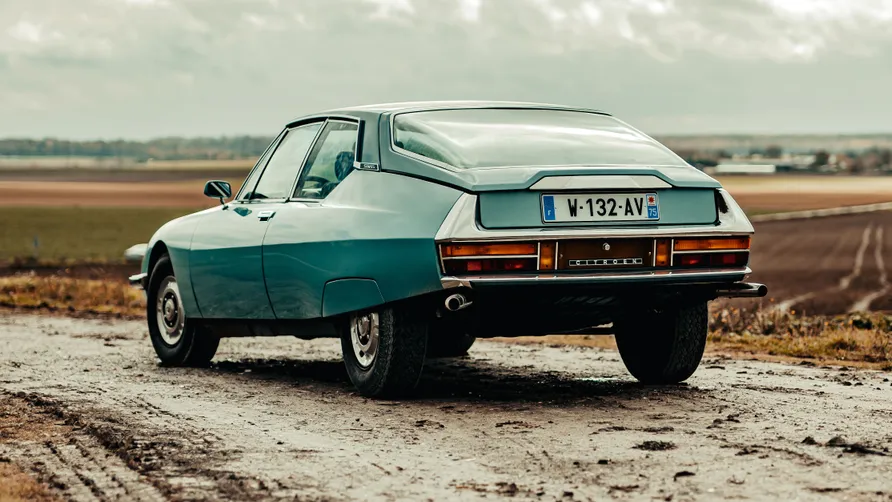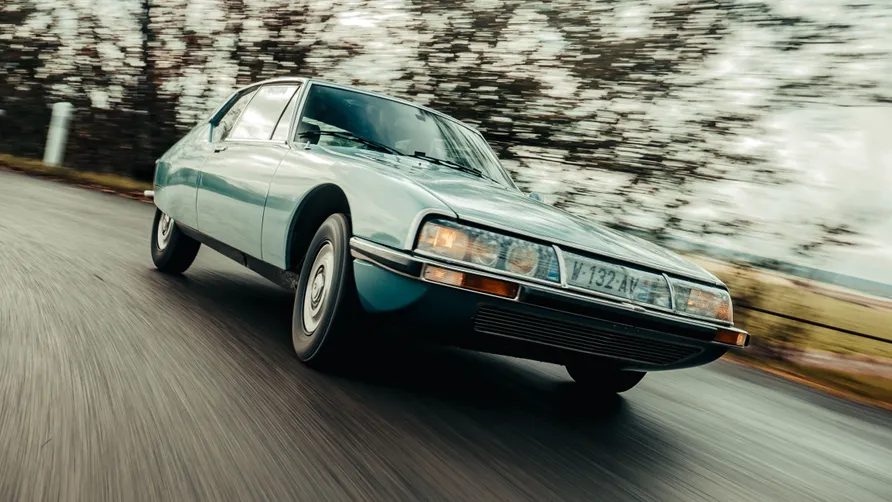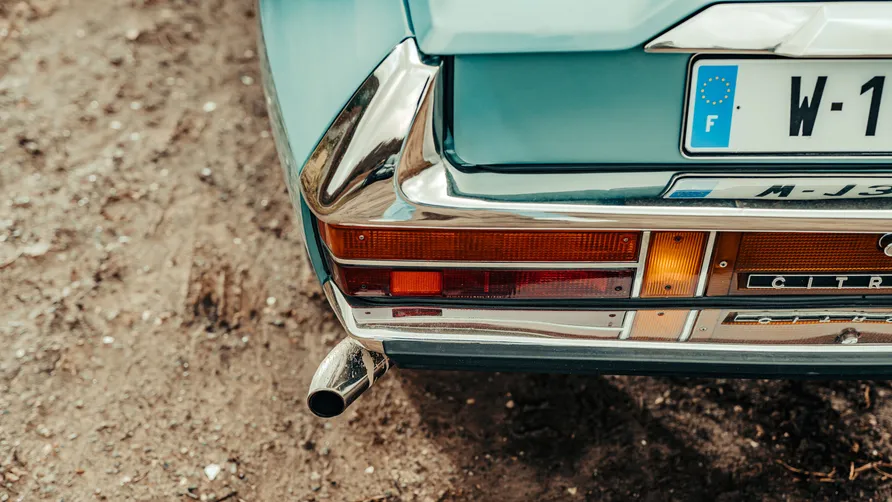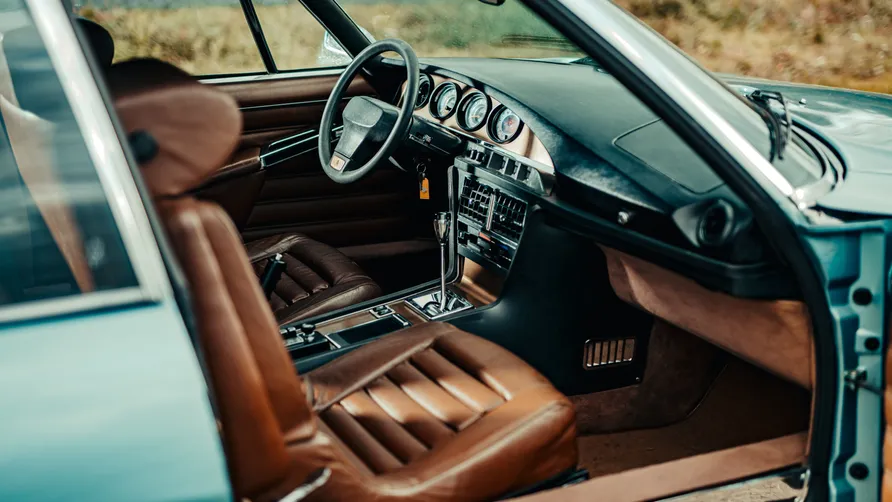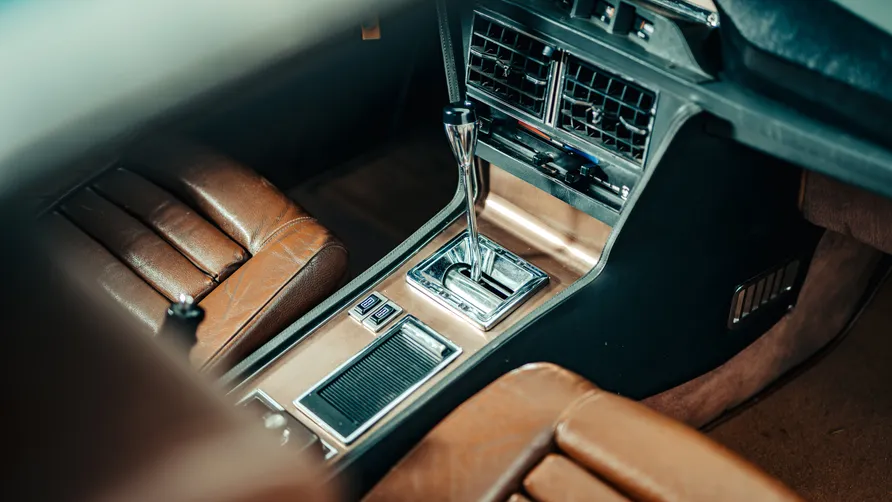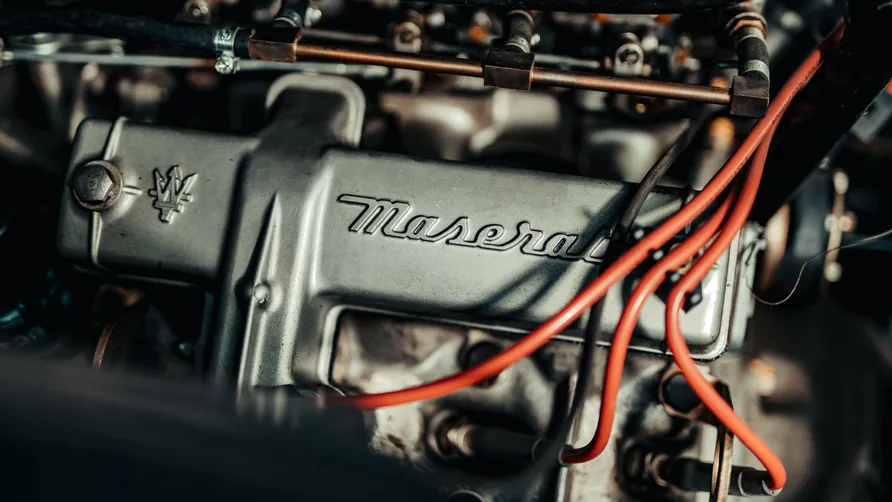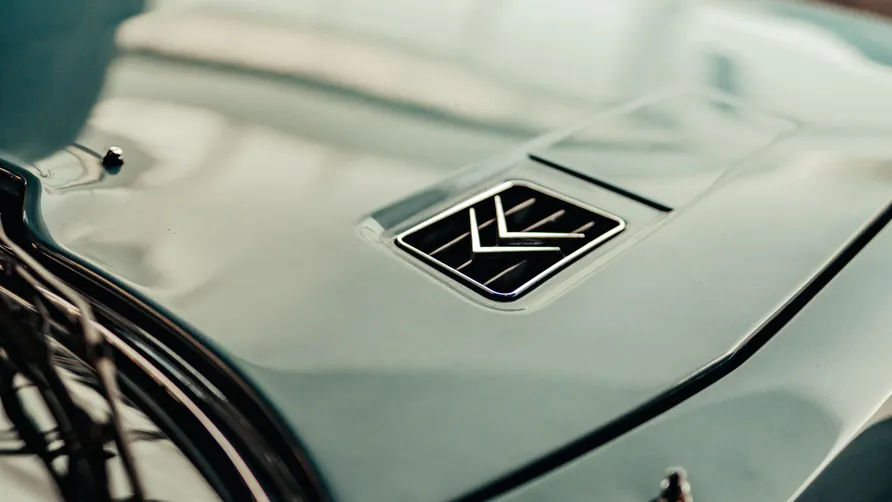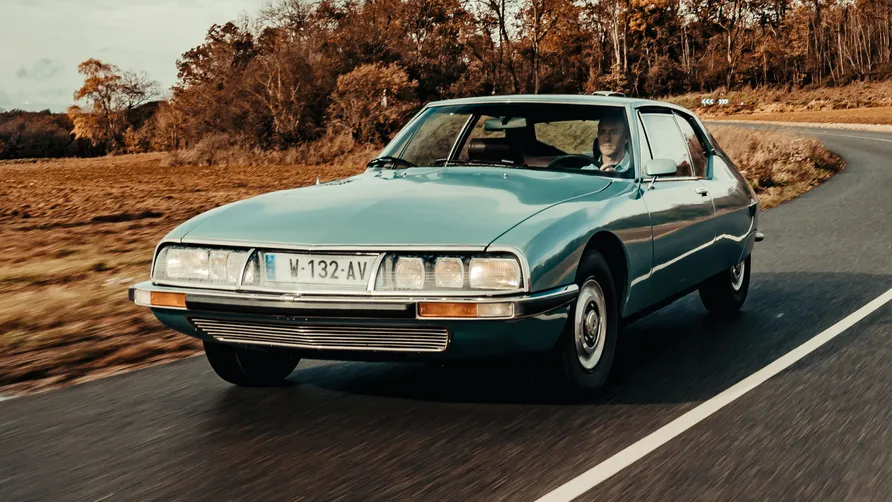
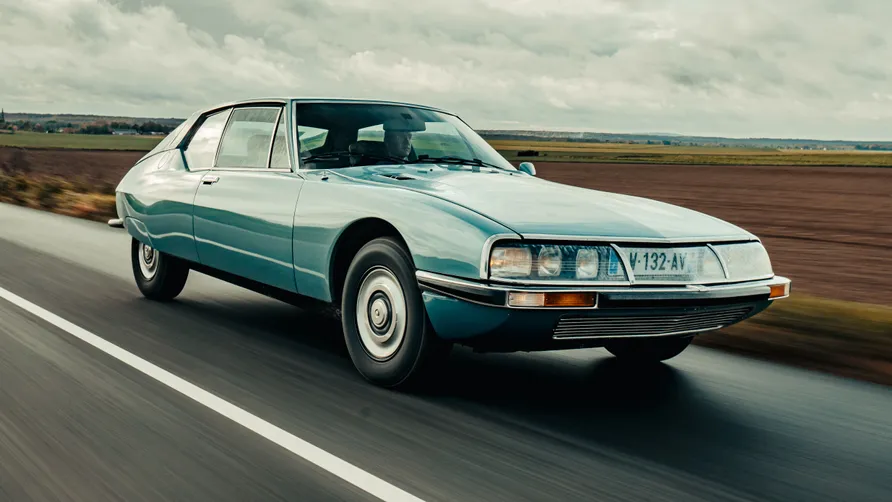
The Citroën SM combined French design and comfort with a Maserati engine. This luxury coupe represented a bold vision of long-distance travel: it offered high speed, hydropneumatic suspension, and technical solutions that set it apart from other cars of its time.
It was unveiled to the public at the Geneva Motor Show in 1970. Its development was part of an effort to create a sportier and more powerful car, drawing on the experience gained with the DS model. A key milestone was Citroën’s acquisition of Maserati in 1968, which paved the way for the Italian six-cylinder engine.
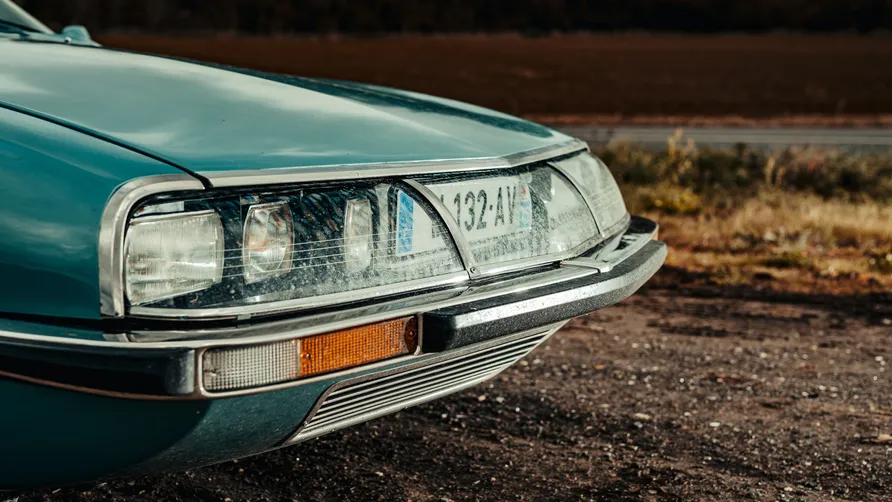
The design was created under the direction of Robert Opron. The long front end, low roof, and body tapering toward the rear created an unmistakable silhouette. The European version featured six headlights under a single glass cover. The lighting system also included swiveling high beams and aic headlight leveling.
The original carburetor version used a 2.7-liter Maserati V6 engine with a displacement of 2,670 cm³, four camshafts, and three Weber twin-chamber carburetors. It produced 170 koní. Later, Bosch electronic fuel injection increased the engine’s output to 178 koní.
The engine was mounted in the front, behind the front axle, and drove the front wheels. This layout was unusual for a high-performance luxury GT and was one of the SM’s defining features. All four wheels were equipped with disc brakes.
One of the most interesting features was the DIRAVI hydraulic steering system. At low speeds, it allowed for easy handling, while the resistance in the steering wheel increased as speed rose. When released, the steering wheel actively returned to the center position. It took only two turns to move from one extreme position to the other, so steering required subtle and precise movements.
The hydropneumatic suspension aically maintained ground clearance based on the load and ensured a comfortable ride. Another unusual feature was the brake control, shaped like a small mushroom, which differed significantly from a standard pedal due to its short travel. Drivers therefore had to get used to this unique way of controlling the car.
The SM was designed primarily as a fast and comfortable touring coupe. Its character was defined by its ability to cover long distances with ease, although its technical complexity also required expert maintenance.
Between 1970 and 1975, 12,920 units were produced. To this day, the Citroën SM serves as a reminder of a time when the brand was able to combine an unusual design, a striking appearance, and the aspirations of a luxury grand tourer in a single car.